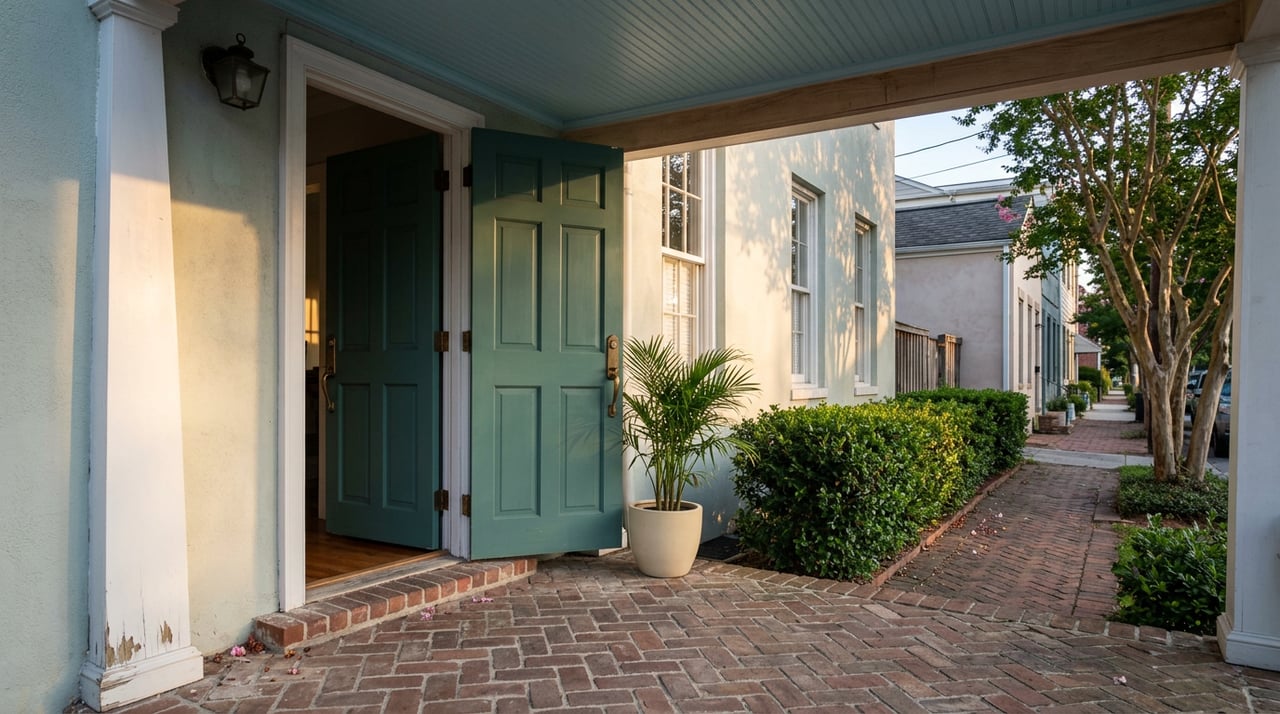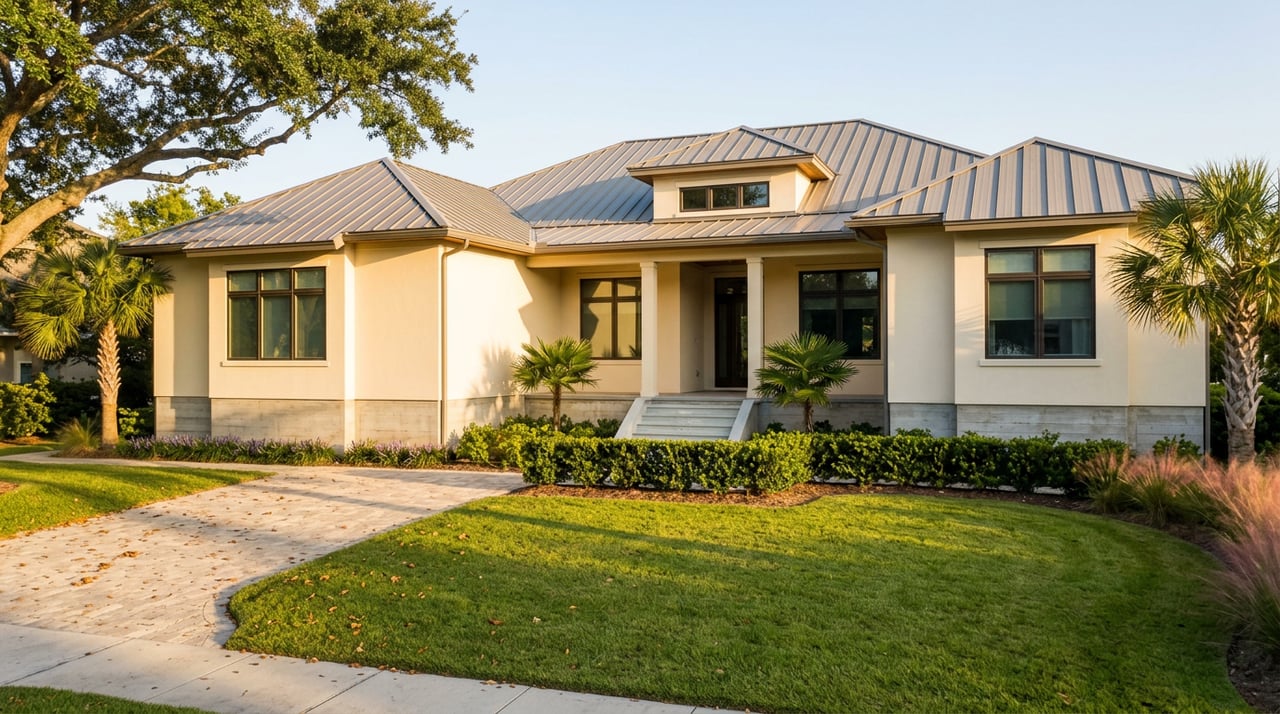
Every few months I get a version of the same phone call. A buyer has fallen for a place on the mainland west of the Indian River, or they've found what looks like a steal near Flagler Avenue on the barrier island, and they call me after the insurance quote comes back. The number doesn't match what they expected, and it doesn't match the house next door either. That's usually the first time anyone tells them the real story in this market isn't beachside versus mainland. It's which side of a flood line their specific lot sits on, and that line runs through both.
The Divide Buyers Assume Isn't the Divide That Matters
Ask most people shopping New Smyrna Beach to describe the market and they'll draw a simple map: the barrier island, with its ocean frontage and Flagler Avenue's restaurants and galleries, versus the mainland west of the Intracoastal, with its planned communities and Indian River sunsets. That's a real geographic split. It is not the one that determines your monthly cost of ownership.
The number that actually matters is your FEMA flood zone. Most of the mainland west of US-1, including Venetian Bay and the neighborhoods around the old Sugar Mill area, falls into Zone X, where flood insurance is often optional and cheap. Most of the barrier island, from the streets near Flagler Avenue down through Coronado, sits in Zone AE or VE, where insurance is mandatory with any mortgage and priced accordingly. But the mainland isn't uniformly safe from this cost. Canal-front and river-front lots along the Indian River, even on the mainland side, frequently carry AE designations too. So a home three blocks from the river in Venetian Bay and a home directly on a canal in that same community can carry wildly different insurance bills despite an identical list price.
What Flood Zone Actually Costs You in 2026
Here's the range I'm currently working from with buyers, based on current FEMA Risk Rating 2.0 pricing bands for Volusia County:
| Flood Zone | Typical Annual Premium | Where You'll Find It in New Smyrna Beach |
|---|---|---|
| Zone X | $400–$1,200 | Most of the mainland west of US-1, including inland Venetian Bay and Sugar Mill area lots |
| Zone AE | $2,000–$8,000 | Barrier island neighborhoods near Flagler Avenue and Coronado, plus canal- and river-front mainland parcels |
| Zone VE | $5,000–$15,000+ | Direct oceanfront blocks along the barrier island |
Two houses on the same street can land at opposite ends of a zone's range depending on elevation, so these figures are planning numbers, not quotes. But the pattern holds: the gap between the cheapest and most expensive zone is bigger than most people's annual property tax bill. That's not a rounding error in a home-buying budget. It's a second mortgage payment hiding inside an insurance line item.
What $450,000 Actually Buys on Each Side of the Bridge
Run that same budget through both submarkets and you get two different houses.
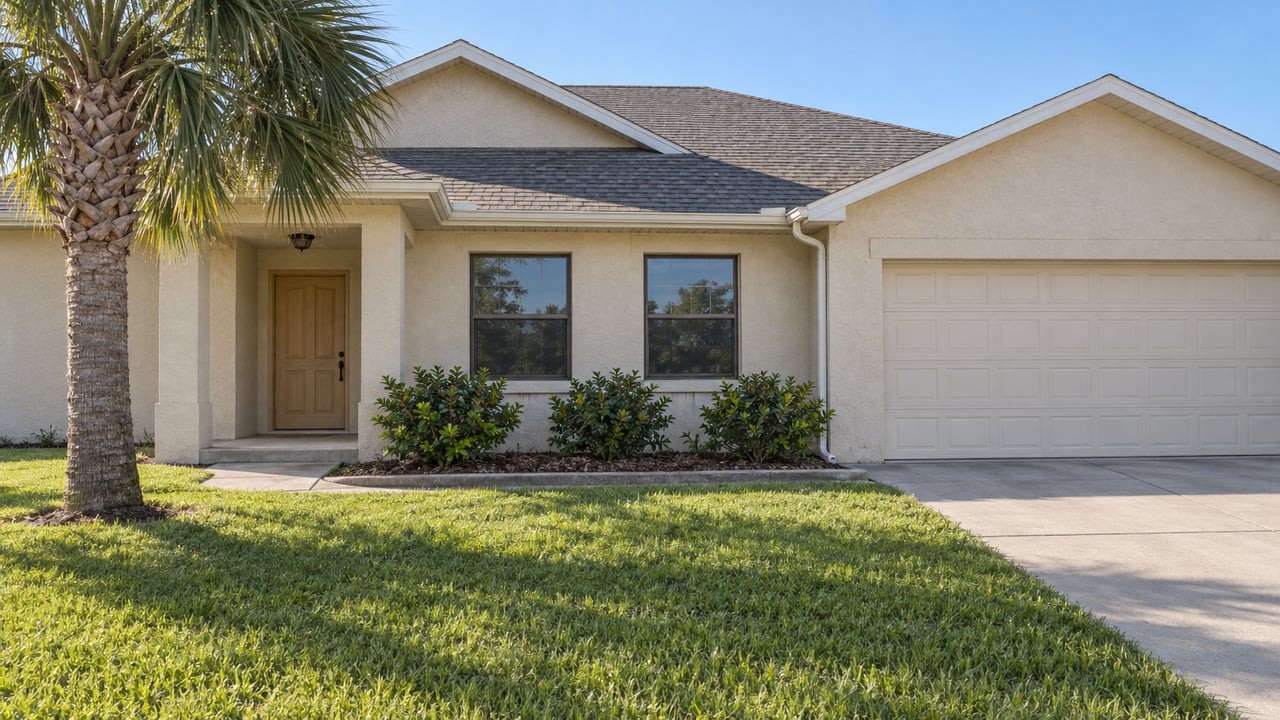
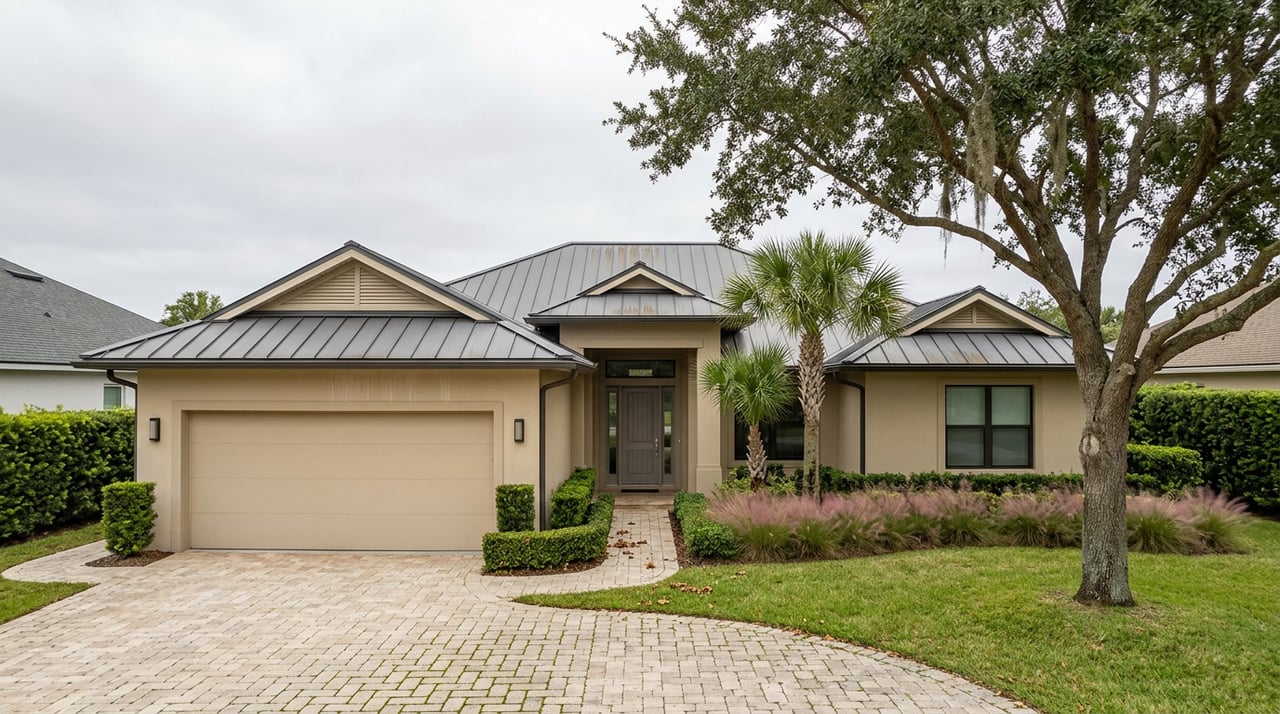
On the mainland, $450,000 in a community like Venetian Bay currently gets you a newer single-family home, often three or four bedrooms, sometimes with a golf course view, sitting in Zone X with insurance closer to the low end of that range. You'll pay an HOA fee, commonly $250 to $550 a month in planned communities like this one, but your flood risk exposure and premium stay modest.
On the barrier island, that same $450,000 is more likely to land you an older two-bedroom condo or a smaller single-family home that needs updating. A straight waterfront or barrier-island footprint on the beach side currently starts closer to $600,000 to $625,000 once you're buying true ocean proximity rather than a view of it. Add the AE or VE insurance premium on top of that purchase price and the real annual cost gap between the two options is larger than the sale prices alone suggest.
The Construction Math Tells the Same Story
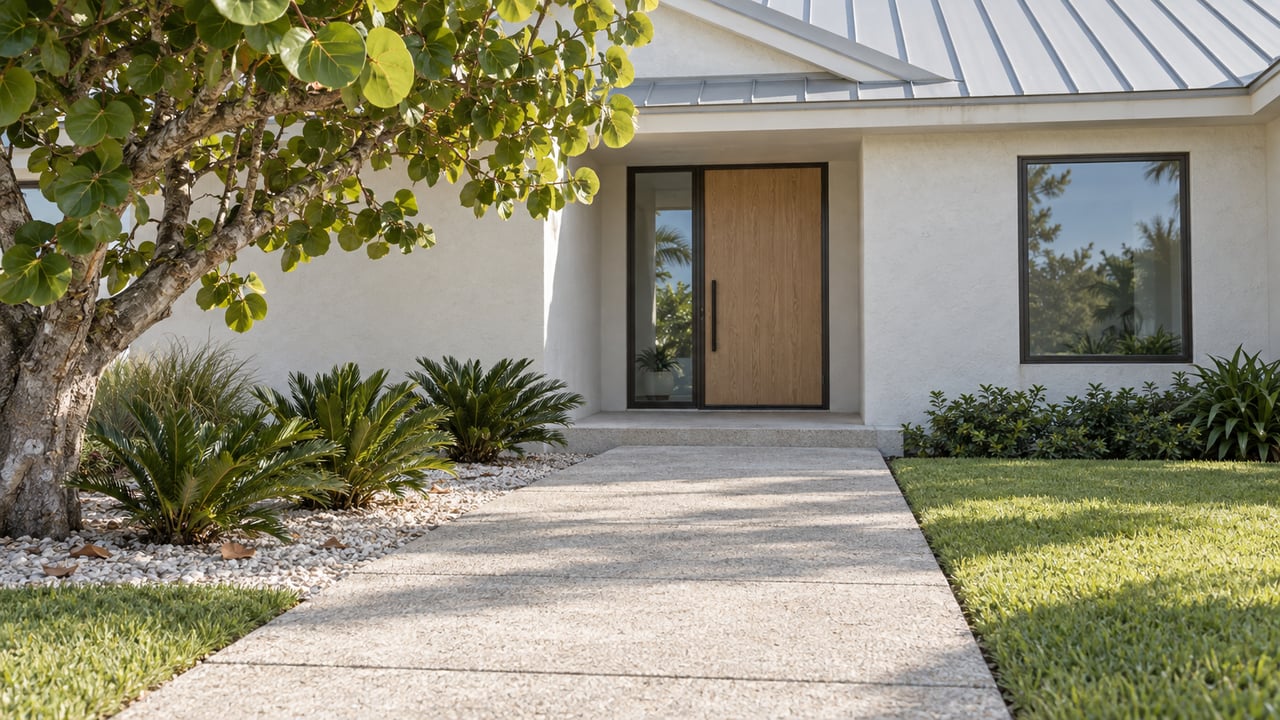
If you're building instead of buying, the flood-zone divide shows up again, this time in materials and foundation requirements. Mainland production homes in planned communities are currently running $180 to $230 per square foot all-in. Custom mainland builds start around $240 per square foot and reach $340 or more for high-end finishes, putting a quality 2,000-square-foot custom home at roughly $528,000 and up.
Beachside construction is a different budget entirely. New construction on the barrier island is limited to begin with, since much of it involves teardown-and-rebuild rather than open lots, and what does get built has to meet elevated-foundation and enhanced hurricane-protection requirements that don't apply inland. Production-style beachside homes currently run $280 to $350 per square foot, and custom beachside builds range from roughly $350 up past $550 per square foot for premium finishes, which puts a 2,000-square-foot beachside custom home anywhere from around $700,000 to well over $1 million depending on the finish level. Impact-rated glazing alone typically adds $19,000 to $32,000 for a home that size. None of that is optional on the barrier island. It's code.
The Quiet Middle Ground
There's a strip of mainland that splits the difference in a way worth knowing about if neither extreme fits your budget. The area west of the bridge around Sugar Mill and Venetian Bay sits mostly in Zone X, but it's still close enough to the Indian River that some buyers get water glimpses or easy boat access without paying beachside insurance rates. It won't get you a walk to the sand, but if your priority is lower carrying costs with a water-adjacent lifestyle, this is where I steer people who ask me to find that balance.
Why "Buyer's Market" Signals Don't Mean the Same Thing Everywhere
Citywide data for New Smyrna Beach in early 2026 painted a picture of a market tilting toward buyers: median days on market climbed toward the mid-90s, months of supply reached 3.87, and homes with price reductions rose to 77.32% of listings, according to Houzeo's January 2026 tracking of local MLS data. Read at face value, that sounds like a market where every seller is under pressure.
But Redfin's neighborhood-level data tells a different story for Southwest New Smyrna Beach specifically, where the median sale price sat at $290,000 as of November 2025, down more than a third year over year, a much sharper drop than the citywide figures suggest. Meanwhile, an April 2026 update from a firm tracking the high end of the market described a tighter picture heading into summer, with inventory for standout waterfront and Intracoastal properties staying limited even as the broader market cooled. As of the final week of August 2026, roughly 657 properties sat active on the local MLS across the entire city, with single-family list prices spanning from around $180,000 to $7.5 million. Average that spread into one median and you get a number that describes no actual house in the market.
What This Means If You're Comparing New Smyrna Beach to Somewhere Else
If you're cross-shopping coastal Volusia County, don't let the citywide median anchor your budget. Ask for the flood zone before you fall for the house. Ask what the insurance actually costs at that specific address, not the zone average, since Risk Rating 2.0 prices each property individually and two homes on the same block can differ by thousands of dollars a year. If you're eyeing an older beachside property, it's also worth knowing that Florida's Elevate Florida program, run through the state's Division of Emergency Management, is currently accepting applications to help homeowners elevate or retrofit properties against flood damage, in some cases covering a large share of the project cost. That's relevant whether you're the buyer weighing a fixer-upper or the seller trying to make one more competitive before listing.
A Few Questions I Get About This
Does a lower list price always mean a lower monthly cost? Not necessarily. A cheaper barrier-island condo in an AE or VE zone can carry a higher effective monthly cost than a pricier mainland home in Zone X once you add the insurance premium to the mortgage payment.
Can I take over the seller's existing flood policy? Often, yes. If you're buying into a higher-risk zone, federal rules generally allow you to assume the seller's current NFIP policy, and if that policy isn't yet at the full risk rate, increases are typically capped at 18% a year until it catches up.
What's the practical difference between Zone X, AE, and VE? Zone X is lower risk and insurance is usually optional. Zone AE means a documented risk from flooding, with insurance required by most lenders. Zone VE adds wave action risk on top of that, which is why it carries the highest premiums in the county.
If you're comparing a mainland lot in Venetian Bay against a place near Flagler Avenue, or trying to figure out what a specific address's flood zone will actually cost you before you write an offer, that's exactly the kind of homework I run for clients before they fall in love with a number that doesn't tell the whole story. Reach out to Stacy Kelly and get your free home valuation, and we'll walk through what your budget really buys on each side of the bridge.