Wondering why one Ormond Beach street feels full of porch-front cottages while another is lined with low-slung ranch homes and newer planned-community builds? You are not imagining it. Ormond Beach has a layered housing story, and that variety is part of what makes the local market so interesting. If you are buying, selling, or simply getting to know the area, understanding the home styles here can help you read neighborhoods more clearly and spot what fits your goals. Let’s dive in.
Why Ormond Beach Looks So Varied
Ormond Beach does not have just one signature house type. The city’s housing mix includes older frame-vernacular homes, bungalow-era properties, Mediterranean and Spanish-influenced designs, postwar ranch houses, and newer subdivision homes.
That blend comes from how the city grew over time. According to the city’s 2024 Housing Element data, 65% of the housing stock is single-family detached, and 62% of homes were built between 1970 and 1999. That means you will see a strong postwar and late-20th-century presence, even as older homes still shape the city’s character.
Historic Roots Shape Local Style
Part of Ormond Beach’s visual identity goes back to the historic core. The 1885 Granada plat was designed around a Spanish-town concept, complete with Spanish street names and a central plaza idea.
That helps explain why Mediterranean and Spanish Revival details feel especially natural here. In older parts of the city, those influences are not random design choices. They are tied to Ormond Beach’s early planning and historic development pattern.
Bungalows and Cottages in Older Areas
If you enjoy older homes with charm and a strong connection to outdoor living, bungalows are one of the easiest styles to spot in Ormond Beach. These homes are typically one to one-and-a-half stories with low-pitched roofs, wide eaves, front-facing gables, and welcoming front porches.
You may also notice tapered wood columns, exposed rafter tails, and brick porch piers. In visual terms, they often feel compact, shaded, and porch-forward, which fits well with a coastal Florida setting.
What makes a bungalow stand out
Craftsman Bungalow is listed among the city’s distinctive local styles. The historic survey includes bungalow examples on early streets such as Division Avenue, Ridgewood Avenue, and Wilmette Avenue.
For buyers, these homes often appeal because they feel personal and rooted in place. For sellers, the architectural details can be a strong feature when marketing the home, especially if original elements have been preserved.
Frame Vernacular Homes in the Historic Core
Not every older home in Ormond Beach fits a neat style label. The city’s historic survey records a large concentration of Frame Vernacular homes near the older civic core.
In simple terms, these are practical early homes that were often shaped more by local building methods and available materials than by high-style ornament. They are an important part of the city’s historic streetscape and can offer a more understated kind of character.
Why these homes matter
Frame Vernacular homes help explain why some older streets feel cohesive even when the houses are not identical. The consistency often comes from scale, setbacks, rooflines, and materials rather than decorative flourishes.
If you are comparing homes in older parts of Ormond Beach, this is helpful context. A house does not need dramatic architecture to carry historic appeal.
Mediterranean and Spanish Revival Influence
Mediterranean and Spanish Revival architecture feel especially at home in Ormond Beach. The city survey notes Florida Boom Period Spanish Revival residences in Buena Vista, and the city’s broader historic vocabulary includes Mediterranean Revival as well.
These homes often stand apart from simpler cottages and bungalows because they tend to feel a bit more formal or stylized. In Ormond Beach, though, they still connect naturally to the local setting because of the city’s early Spanish planning influence.
What buyers often notice
When you tour homes with Mediterranean or Spanish-inspired features, you may notice stucco finishes, tiled roof influences, and a stronger sense of architectural identity. Even when details vary from house to house, the overall look usually feels intentional and regionally appropriate.
For sellers, this style can create strong curb appeal. For buyers, it can offer a home with a more defined visual personality.
A Few Rarer Historic Styles
Ormond Beach’s older housing stock is not limited to the most common local forms. The city’s survey and code materials also reference Queen Anne, Dutch Colonial Revival, Eastlake, and Art Moderne.
These styles are less common, but they add depth to the city’s historic housing story. Their presence means Ormond Beach has more architectural variety than many buyers expect at first glance.
Art Moderne by the coast
The city survey describes one Art Moderne house on Ocean Shore Boulevard with smooth wall surfaces, an asymmetrical facade, and sleek horizontal lines. That is a very different visual language from a bungalow or vernacular cottage.
Details like this show how broad the local architectural mix can be. In some pockets, you are not just choosing a location. You are choosing a whole design era and feel.
Ranch Homes Define Much of the Market
While historic homes add charm, ranch homes and ranch-adjacent designs make up a big part of what many buyers will actually see in Ormond Beach. This fits the city’s age profile, since most housing was built after 1970 and much of Florida’s postwar suburban housing followed ranch patterns.
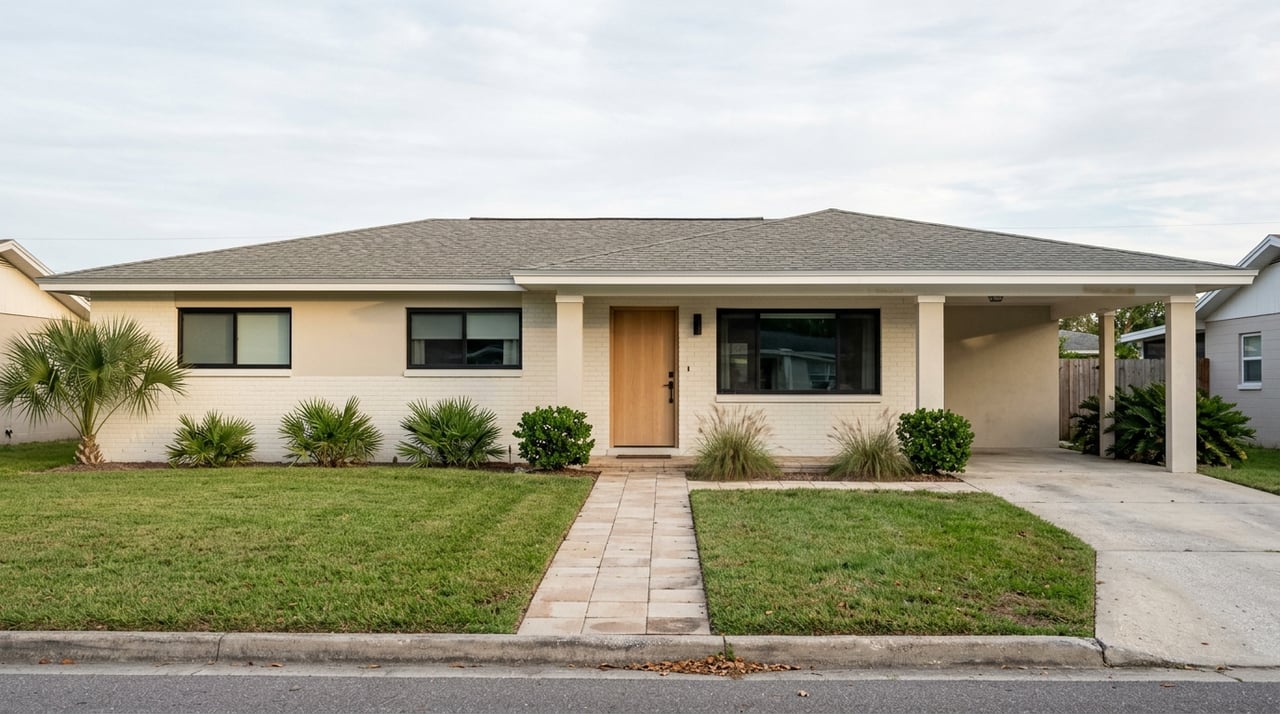
The classic ranch is usually a low-profile, one-story home with a practical layout, large picture windows, sliding glass doors, and a strong connection between indoors and outdoors. In Florida, these homes often include carports or garages tucked under the main roofline.
Why ranch homes remain popular
Ranch homes tend to feel easy to live in. Their simple geometry, modest rooflines, and functional layouts appeal to buyers who want comfort without a lot of formality.
You may also see ranches with traditional details like shutters, entry porticos, columns, tiled roofs, stucco finishes, or asymmetrical facades. That is one reason two homes from the same era can still look quite different.
Newer Planned Communities and Subdivision Design
Newer Ormond Beach development often centers less on historic style labels and more on neighborhood planning, lot type, and consistent streetscape design. The city’s development records point to residential growth in places such as River Oaks, Chelsea Place, Cypress Trails, Pineland, and Plantation Oaks.
These areas often present a more standardized look than older parts of town. Instead of individual historic detailing, the emphasis is usually on cohesive neighborhood design, attached garages, broader rooflines, and repeatable floor plans.
What newer neighborhoods may include
The city describes Ormond Crossings as a 3,000-acre live/work planned community with a mix of residential options. Residential areas there allow:
- Condos
- Apartments
- Townhomes
- Patio homes
- Zero-lot-line homes
- Row homes
- Duplexes
- Triplexes
- Four-plexes
- Detached single-family homes
For buyers, that means newer Ormond Beach housing can offer a wider range of formats and maintenance levels. For sellers, it means your home may be compared not just by style, but also by neighborhood structure and layout.
Older Homes Versus Newer Homes
If you are deciding between an older home and a newer build in Ormond Beach, the difference often comes down to feel as much as features. Older homes tend to emphasize porches, compact massing, architectural detail, and a more varied streetscape.
Newer homes often emphasize attached garages, larger footprints, standardized planning, and more uniform curb appeal. Neither is automatically better. The right fit depends on how you want to live and what kind of neighborhood character matters most to you.
| Older Ormond Beach Homes | Newer Ormond Beach Homes |
|---|---|
| More likely to have porches and distinctive details | More likely to have attached garages and broader rooflines |
| Often found in visually varied streetscapes | Often found in consistent planned neighborhoods |
| May include bungalow, vernacular, or revival influences | Often shaped by subdivision-era design and lot type |
| Can feel more compact and individually styled | Can feel more standardized and layout-driven |
What Historic Rules Can Mean for Buyers
If you are shopping for an older home, it helps to know that some properties are part of a regulated historic environment. In Ormond Beach, the Historic Landmark Preservation Board oversees historic preservation matters.
The city requires Certificates of Appropriateness for exterior changes in the Lincoln Avenue Overlay District or for designated landmarks. The city also states that demolition review applies to structures built before January 1, 1950.
Why this matters before you buy
If you love the look of an older home, that context is important. Historic oversight can help preserve neighborhood character, but it can also affect how exterior changes are reviewed.
This does not mean you should avoid older homes. It simply means you should understand the property’s context early, especially if you are thinking about renovations or major exterior updates.
How to Read Home Style When Touring
When you walk through Ormond Beach neighborhoods, it helps to look past finishes and staging and focus on the home’s core form. Roofline, porch placement, window shape, facade symmetry, and garage position can tell you a lot about the home’s era and style.
A few quick clues can help:
- Bungalow: low-pitched roof, deep porch, tapered columns, compact footprint
- Frame Vernacular: simple form, practical layout, modest detailing
- Mediterranean or Spanish Revival: more stylized exterior, regional character, stronger design identity
- Ranch: one-story profile, wide layout, large windows, indoor-outdoor flow
- Newer subdivision home: attached garage, broader massing, neighborhood consistency
Understanding those patterns can make your search feel more focused. It can also help you compare homes based on lifestyle fit, not just square footage.
Why Style Matters in Your Search or Sale
Architecture is not just about appearance. It shapes how a home lives day to day, how it fits into the streetscape, and how buyers emotionally respond to it.
If you are buying in Ormond Beach, knowing the local style mix can help you narrow your priorities faster. If you are selling, understanding where your home fits in the city’s housing story can help you present it more clearly and market it more effectively.
Whether you are drawn to a porch-front bungalow, a practical ranch, or a home in a newer planned community, local context matters. If you want help comparing neighborhoods, understanding home styles, or planning your next move in Ormond Beach, connect with Stacy Kelly.
FAQs
What home styles are common in Ormond Beach?
- Ormond Beach includes bungalows, Frame Vernacular homes, Mediterranean and Spanish Revival influences, ranch homes, and newer subdivision-style homes, with single-family detached housing making up the largest share of the local stock.
What do bungalow homes in Ormond Beach usually look like?
- Bungalow homes in Ormond Beach often have low-pitched roofs, wide eaves, front-facing gables, porches or verandas, tapered columns, and a compact, porch-forward design.
Are ranch homes common in Ormond Beach neighborhoods?
- Yes. Ranch homes and ranch-adjacent designs are a major part of the local market, which aligns with the city’s large share of post-1970 housing.
Do newer Ormond Beach communities have different architecture?
- Yes. Newer communities often focus more on consistent neighborhood planning, attached garages, broader rooflines, and a range of housing formats rather than distinct historic architectural labels.
What should buyers know about historic homes in Ormond Beach?
- Buyers should know that some older homes may fall under local historic preservation rules, including exterior review requirements in the Lincoln Avenue Overlay District or for designated landmarks.
Why does Ormond Beach have Spanish and Mediterranean influences?
- The city’s historic core was shaped in part by the 1885 Granada plat, which followed a Spanish-town concept with Spanish street names and a central plaza idea, helping explain why those styles feel especially local here.